Saturday, 20 July 2013

Healing Scars Naturally

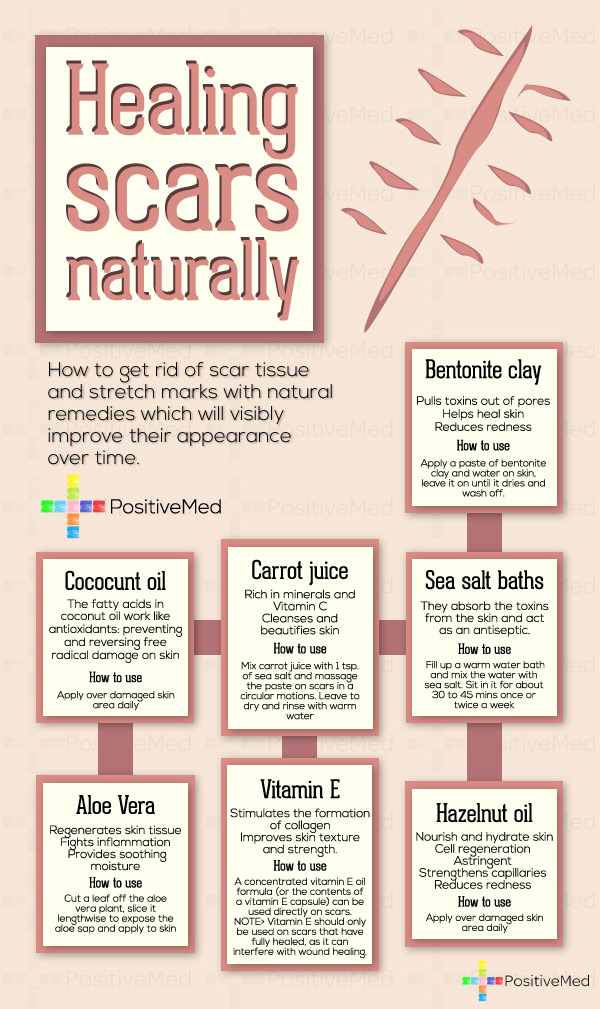
Several people email and ask us how to get rid of scar tissue, stretch marks, etc. Much of your ability to not show scars depends on genetics, but there are some natural remedies that can visibly improve the appearance of scars and stretch marks over time. These include bentonite clay (topically) and carrot juice (orally). check out this poster for more:
clear scars using natural remedies
Bentonite clay is a unique substance and an internal and external cleanser for very good reasons; it is primarily formed of an extremely flat crystal flake that carries a relatively strong negative ionic charge called Montmorillonite, which elevates your body’s PH and absorbs some of the hydrogens from your cells enabling them to fill that space with the oxygen you so dearly need.
Coconut oil’s ability to nourish and heal the skin and its wonderful moisturizing and healing powers have been known for generations. As a saturated fat consisting primarily of medium chain fatty acids (MCTs), it is not easily oxidized and does not cause harmful free radical damage like polyunsaturated vegetable oils.
Aloe Vera juice not only soothes inflamed skin it is a fantastic way to remove scars, boost the immune system and regenerate damaged tissue. Aloe Vera has acerbic qualities that ensures, with regular usage, that acne breakouts or scars would be easily prevented resulting in a softer skin, decreased swelling and invigorating new cell growth and thereby reduced acne scars which eventually fade over time.
Carrot juice is very rich in nutrients that help our skin such as potassium, which prevents skin dryness and reduces blemishes and scars and maintain our skin well-hydrated. It has anti-inflammatory property, and helps to revitalize and tone the skin. Drinking the juice regularly will keep your skin moisturized, smooth, soft and supple. It is also packed with antioxidants that prevent skin problems like eczema, dermatitis, wrinkles and even rashes.
Hazelnut oil can be used as a skin cream and/or lotion. This oil resists spoiling, allowing you to keep your homemade skin creams longer. Hazelnut oil is rich in vitamin E and essential fatty acids. Vitamin E may help reduce the appearance of scar tissue.
Vitamin E is an antioxidant and can help protect your body from sun damage, because of this, it’s added to many over-the-counter skin care preparations and it’s naturally found in foods like fruits and vegetables, and is an essential part of your everyday diet.
Vitamin C is an antioxidant which helps to reverse skin damage. You could use lemons on your skin since this is a strong form of Vitamin C, BUT this could result in drying out, so you need to do one in one form and the other in another form, meaning use vitamin E oil on your skin, but take vitamin C orally.
Asparagus and certain herbs renew your natural skin moisture and youthfulness. Visited (32886) times!

Friday, 19 July 2013

Top 11 Anti Aging Foods

1. Berries
- -blueberries, raspberries, cranberries, strawberries
- -super rich in antioxidants (Anthocyanins)
- -promote cell health and can protect against disease.
- -Darker berries, especially ones that are black or blue in color ,tend to provide the best anti-aging benefits because they have the highest concentration of antioxidants
2. Beans
- they’re good for your heart.
- excellent source of low-fat protein, especially for those who don’t eat meat.
3. Whole Grains
- Rich in fiber, vitamins, minerals, and antioxidants
- lower the risk of age-related illnesses such as cardiovascular disease and cancer.
-
4. olive oil
-Rich in antioxidants and anti-inflammatory monounsaturated fat.
-Fights cancer, and age-related illnesses.
Top 11 Anti Aging Foods
5. Tomatoes
- -Contain lycopene, an antioxidant compound that helps maintain youthful skin texture.
- -Reduces the risk of some types of cancer (especially prostate, lung, and stomach cancers) and heart disease.
6. Nuts
- -Have a generous helping of healthy fats, vitamins, and protein that benefit cardiovascular and brain health.
- -High in compounds that ease inflammation.
7.Fish
- -oily fish provide omega-3 fatty acids that help combat inflammation in the body.
- -eating several weekly servings of such fish like salmon, gives a lower risk of Alzheimer’s disease and stroke.
8. kale and spinach
- contain special phytonutrients, or antioxidant compounds, that help guard against damage caused by the sun.
-loaded with beta-carotene and lutein, two nutrients that have been shown to improve skin elasticity.
9. Red Grapes
- contain an antioxidant called resveratrol, that has anti-inflammatory and anticoagulant properties,
- -promotes heart health.
10. Green tea
- -contain the most EGCG, one of the most powerful antioxidants.
- -Green tea consumption lower rates of conditions such as heart disease, cancer, and Alzheimer’s disease.
11. Dark Chocolate
- Eating (or drinking) dark chocolate has been shown to help protect the skin against the harmful effects of UV.
- Eating dark chocolate can increase circulation in the skin and improve its ability to retain moisture.

Tuesday, 16 July 2013

Head Massage Techniques to Relieve Tension

How to release your tension naturally for face-lift purposes: a gentle head rub is a marvelous way to relax the whole head and face, improving circulation and easing stress. The sequence is easy to give to yourself; you can do it on dry hair or try it in the shower with shampoo. It will give you an invigorating start, or relaxing end, to the day.
1. Place both hands in your hair on top of your head, and rest them there, breathing deeply. Feel the heat gather under your fingers.
2. Move your hands in your air slowly, making firm, circular massage movements all over the top, sides, and back of your skull. Use your thumbs and fingertips to get good pressure, stimulating the scalp and muscles over the skull.
head massage
3. Using the heels of your hands, massage slowly and deeply in the area just above your ears, making circles one way, then the other way. Your cheeks muscles connect in here.
4. Bring the heels of your hands to your temples and repeat the same circular movements-these areas respond well to touch, and a lot of tension is stored here. You are improving muscle tone and circulation close to your eyes.
5. Use your thumbs to massage deeply at the base of the skull behind the ears; this action is wonderfully beneficial to the circulation of the neck and jaw area and helps to prevent migraine.
6. Finally, stroke your head from front to back, running your hands through your hair slowly. This feels very soothing and makes you feel that you are taking care of yourself.

Sunday, 14 July 2013

Natural Treatments for Hives

Hives can be described as the skin version of an allergy attack, also known as urticaria, there are many things that can trigger it, such as: food, dust, pet dander, and many others. Your immune system senses a hostile invader and kicks into overdrive, and the first line of defense is the skin.
HIVES
Here are some natural ideas you can use the next time these tiny blood vessels begin to leak a protein-rich, itch causing fluid.
  • Apply a wet, cold compress to the hives to reduce the swelling and cool the inflamed skin.
  • Drink herbal teas
herbal-tea
  • Herbal antihistamines, like freeze-dried preparations of stinging nettle, which is known for its ability to reduce the amount of histamine the body produces. Coldsfoot extract and basil may also work.
  • Soak in a warm oatmeal bath to relieve itching and soothe skin.
  • Apply Aloe Vera topically to hives as well as to the skin surrounding any affected areas, it helps the affected skin to heal more quickly.
aloe-vera
  • Use ginger ‘the wonder drug,’ incorporate into food or drink in tea, you can also gently daub the ginger meat onto the inflamed skin.
  • Boost your immune system with a vitamin-rich diet.
  • Seek professional help if your attempts at providing relied are not effective, or if you have extremely painful chronic hives.Source:
Source:
From: Home Remedies from a country Doctor from Jay Heinrichs, Dorothy Behlen Heinrichs, and the editors of Yankee Magazine, 2013.
From: Natural Remedies for Healthy Living , The Readers Digest Association,2011
From: The Illustrated Encyclopedia of Healing Remedies, C. Norman Shealy 2002

Friday, 12 July 2013

Weight Loss Made Simple: 4 Tips you can put into Action Today.


Weight Loss Made Simple: 4 Tips you can put into Action Today.

Weight Loss Made Simple
4 Tips you can put into Action Today.
By Danielle Prestejohn
With all the crazy diet trends and plans out there it is hard to know what exactly you need to do to lose weight. What if I told you it is so much easier than you think? In fact, weight loss can be simple and almost effortless with these few easy tips. Try them out and get started losing weight today.
1. Move. Movement boosts our mood, increases endorphins, and keeps your metabolism running. Plus, strength training builds muscle that actually burns more calories at rest than fat. If that hasn’t convinced you, think of exercise as a natural anti-depressant, or anxiety pill. It’s a great way to release pent up emotions and connect with your body. Find a movement you love and stick with it! Stay active 6-7 days a week by moving your body in a way you enjoy. This can be anything from walking, to dancing, to boot camp, to hiking.
2. Think Before you Eat. Are you hungry? What are you craving? These are two key questions to ask yourself before you sit down to the table. The more you pay attention to your hunger cues, the easier it will be to recognize when you are satisfied, as well as notice the difference between when you reallyneed to eat and when you want to eat. It also important to check in with what your body is craving. Do you want something hot or cold? Creamy or crunchy? Sweet or salty? All of these answers will help you to eat the most satisfying meal possible, meaning when you finish you will be fully satiated and not in need of more food.
Weight Loss Made Simple- 4 Tips you can put into Action Today.
3. Check your Emotions at the Door. If you’re emotional get out of the kitchen. When certain emotions come up you may find yourself eating in place of actually feeling or dealing with your emotions. Not only does this mean you are mindlessly eating when you’re not really hungry, but also you also never address the emotions coming up. This means problems don’t get solved, your feelings persist, and they will be sure to come up again. Check in with yourself before you eat and ask whether you are actually physically hungry, or just emotional and craving something emotionally.
4. Slow Down. Slowing down helps us to relax and when we are relaxed we are in a prime state of digestion. So next time you sit down to a meal, take 3 deep breaths, eat slowly, and without distractions. Eating slowly will allow you eat mindfully and notice when you are satisfied. It often takes 20 minutes to feel full from a meal, even if it took you 2 minutes to eat it. So slow down and be sure to pay attention to your hunger and satisfaction levels. In addition make sure you are eating at a table, with your food on a plate, and with no distractions. This means no phone, computer, TV, or emails. Anything other than light conversation is going to take your focus off of your food, making it less likely to digest properly, and making you less likely to stop when you’ve had enough.
Get started implementing this tips today and I’m confident you will notice a difference in no time. Still struggling with this concept and in need of more support? Sign up for my FREE guide to Ditch the Diets by clicking here:
http://danielleprestejohn.com/free-updates/
http://danielleprestejohn.com/free-updates/ Visited (1515) times!

8 Foods That Make You Smarter

Eating well will not only give you the body you want, it is actually very important for your physical and mental health. The brain, just like any other organ, needs nutrients and minerals to keep the grey matter as healthy as possible. The following are some of the best foods you can provide your brain with.
81226f95d74c624a3e4edac514de887e
  • Wholegrains
They release glucose slowly into the bloodstream, keeping you mentally alert throughout the day, which promote the ability to concentrate and focus that comes from the adequate, steady supply of energy in our blood to the brain
  • Oily fish 
The most effective omega-3 fats occur naturally in oily fish as EPA and DHA, which are good for healthy brain function, the heart, joints and general wellbeing.
  • Blueberries 
They improve or delay short term memory loss.
75bf52ed6335f31d4375da6fe7a69fdc
  • Tomatoes 
They are packed with lycopene, a powerful antioxidant that protects against the kind of free radical damage to cells which occurs in the development of dementia.
  • Pumpkin seeds 
They are packed with zinc, which are vital for enhancing memory and thinking skills.
  • Broccoli
They are a great source of vitamin K, which is known to enhance cognitive function and improve brainpower.
  • Sage
They have had a long reputation of improving the memory.
sage
  • Nuts 
They are packed with vitamin E, which helps to prevent cognitive decline, particularly in the elderly.
mixed-nuts

Tuesday, 9 July 2013

Detecting Nutritional Deficiencies

A healthy diet can provide all a growing body needs, but the reality of our busy lifestyles and sometimes finicky eating patterns can lead to vitamin deficiency. Knowing what to look for is part of the battle. We wanna help you detecting nutritional deficiencies.
Symptoms are actually better indicators of nutritional deficiency than signs.
detecting-nutritional-deficienciesWEB
Hands
  • Cold hands: magnesium deficiency, hypothyroidism, chronic fatigue with low cardiac output
nailsNails
  • White spots: mineral deficiency but often low zinc
  • Ridges: zinc deficiency
  • Soft or brittle nails: magnesium deficiency
  • Bitten nails: general mineral deficiency
Skin
  • Stretch marks: zinc deficiency
  • Follicular hyperkeratosis: vitamin A deficiency
  • Spontaneous bleeds: vitamins C or K or platelet deficiency
  • Dry scaly skin with hair follicles plugged with coiled distorted hairs and a red halo: vitamin C deficiency
  • Yellow palms: excessive beta carotene intake
  • Pimply rough skin at the back of the upper arms “chicken skin”: essential fatty acid deficiency
tongue
Mouth
  • Pale fissured tongue: iron deficiency
  • Sore painful fissured tongue: vitamin B3 deficiency
  • Sore burning tongue and lips and peeling of lips: vitamin B2 deficiency
  • Swollen tongue with lateral teeth indentations: food intolerance
  • Painful sore tongue with a smooth appearance: folic acid deficiency
  • Cracked lips: vitamin B2 deficiency, thrush
Sking of face
  • Greasy red scaly skin of face and sides of nose: vitamin B2 deficiency
  • Seborrheic dermatitis around nose and an acne like forehead rash: vitamin B6 deficiency
Detecting Nutritional Deficiencies
Eyes
  • Cataracts: chromium deficiency or excess free radicals
  • Bags or dark rings under eyes: allergies or food intolerances
  • Blue eyes and blond hair are often found in hyperactive male children: zinc magnesium, B6 and essential fatty acids deficiencies
  • Blue eyes and premature grey hair – vitamin B12 deficiency: a feature of pernicious anemia
thyroid
Troat

  • Thyroid swelling: iodine deficiency, hypothyroidism
Heart
  • Any problem with the heart, including irregular beat, high blood pressure, cardiomegaly: magnesium and Co Q 10 deficiencies and sensitivity to caffeine.
Legs
  • Tender calf muscles: magnesium deficiency
  • Brisk knee reflexes: magnesium deficiency
  • The following problems can suggest particular deficiencies or allergies:
  • Nasal polyps: salicylate sensitivity